EN
Modern poultry farming has moved well beyond the days of manual egg counting and guesswork incubation. The pressure now comes from multiple directions: consumers want cleaner production, regulations tighten around biosecurity, and margins keep shrinking unless you squeeze more efficiency from every stage. What actually makes the difference is how well your equipment systems talk to each other, from the moment eggs enter the setter to when finished products leave the farm gate.
The quality of day-old chicks sets the ceiling for everything that follows. Poor incubation produces weak birds that struggle to convert feed efficiently, fall sick more often, and never quite catch up. Advanced setter incubator technology addresses this by maintaining tighter control over temperature gradients, humidity levels, and turning schedules throughout embryonic development.
Single-stage and multi-stage incubators each serve different operational models. The choice depends on your production rhythm and biosecurity requirements.
| Feature | Single-Stage Setters | Multi-Stage Setters |
|---|---|---|
| Batch Management | All-in, all-out for specific batches | Continuous loading of different embryonic stages |
| Environmental Control | Highly precise, customizable for each batch | Shared environment, less specific control |
| Biosecurity | Enhanced, easier to clean between batches | More challenging to maintain strict biosecurity |
| Energy Efficiency | Potentially higher, optimized for specific needs | Generally lower initial cost, but less adaptable |
| Flexibility | High, ideal for varied production schedules | Lower, suited for consistent, large-volume production |
Single-stage systems allow you to fine-tune conditions for each batch independently. When one group finishes, you clean thoroughly before the next arrives. Multi-stage setters work better for operations running continuous high-volume production where the economics favor keeping machines constantly loaded.
Automated controls in setters and hatchers remove the variability that comes with human monitoring. Temperature sensors respond faster than any technician walking rounds, and humidity adjustments happen in real time rather than after someone notices condensation on the viewing window.
Streamlined chick handling systems reduce the physical stress birds experience during transfer from hatcher to grow-out facilities. Less stress means lower early mortality and better immune function during the critical first week. The labor savings add up quickly when you calculate how many person-hours go into manual monitoring and intervention across a commercial-scale hatchery.
Feed represents the largest variable cost in poultry production. Intelligent poultry feeding systems deliver precise rations based on growth stage, ambient temperature, and consumption patterns rather than dumping fixed amounts on a schedule.
Precision feeding stations track how much each section of birds consumes and adjust delivery accordingly. When feed conversion ratios improve even marginally, the cumulative savings across thousands of birds become substantial. Automated feed delivery also eliminates the feast-famine cycles that occur when workers fill hoppers inconsistently.
TMR feed transport mixers ensure uniform nutrient distribution throughout each batch. Birds receiving consistent nutrition develop more evenly, which simplifies processing and improves final product uniformity.
Every time a human hand touches an egg, contamination risk increases. Automated egg collection systems move eggs gently from nest to packing with minimal contact, reducing both breakage and microbial exposure.
The mechanical handling is calibrated for the specific egg sizes your operation produces. Proper calibration means fewer cracked shells and less product downgrade. Clean eggs command better prices and face fewer rejection issues at processing facilities.
Beyond quality, automated collection supports biosecurity protocols by limiting foot traffic through production areas. Fewer people moving between houses means fewer opportunities for disease transmission.
When feeding and collection systems share data, you gain visibility into relationships that manual operations miss entirely. Feed consumption patterns can predict laying performance. Collection timing can be optimized around feeding schedules to reduce bird disturbance.
This integration reduces the total labor footprint while maintaining consistent operational standards. The environmental benefits follow naturally: less wasted feed means lower input requirements per egg produced, and automated systems typically run more energy-efficiently than manual alternatives operating around the clock.
Poultry house ventilation systems do more than move air. Properly designed systems manage ammonia levels, control humidity, and maintain the temperature gradients that keep birds comfortable without excessive heating or cooling costs.
Ammonia reduction matters for both bird welfare and worker safety. High ammonia concentrations damage respiratory tissue and suppress immune function. Effective ventilation combined with appropriate litter management keeps concentrations within acceptable ranges.
Waste management connects directly to environmental compliance and potential revenue streams. Manure processed into organic fertilizer creates value from what would otherwise be a disposal cost. The circular economy approach makes regulatory compliance easier while potentially generating additional income.
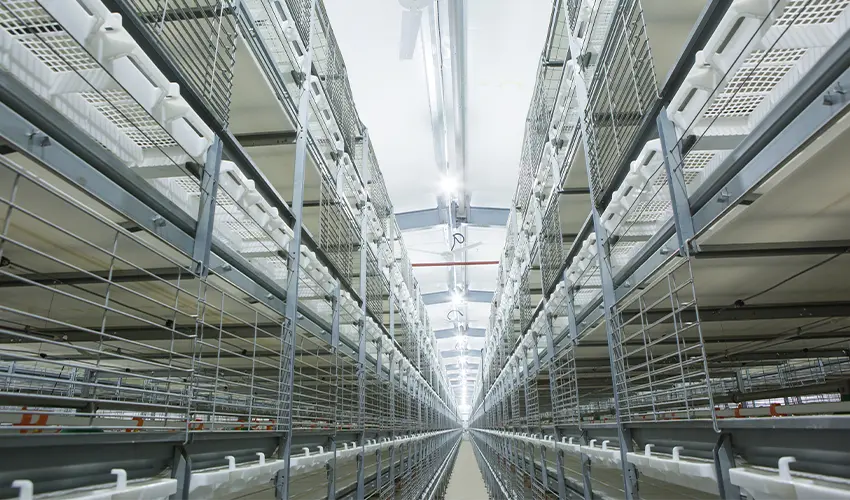
Smart farm equipment investment pays back through multiple channels simultaneously. Higher hatch rates from better incubation, improved feed conversion from precision feeding, reduced labor costs from automation, and better product quality from gentle handling all contribute to the return calculation.
Scalable poultry solutions matter because markets shift and regulations change. Equipment that can grow with your operation or adapt to new requirements protects your investment over longer time horizons. The farms that struggle most are those locked into rigid systems that cannot respond when conditions change.
Financing structures that account for the phased nature of agricultural returns make these investments more accessible. Equipment that pays for itself over time through operational savings represents a different risk profile than equipment purchased purely on capital cost considerations.
Capacity planning requires honest assessment of both current needs and realistic growth projections. Undersized equipment creates bottlenecks; oversized equipment wastes capital on unused capacity.
The precision incubation controls available vary significantly between manufacturers. Look for systems with proven track records in conditions similar to your operation. Climate, altitude, and local egg characteristics all affect performance.
Energy efficiency deserves careful attention given that incubation runs continuously. Small percentage differences in power consumption compound over years of operation. After-sales support and parts availability matter more than initial purchase price when equipment runs around the clock and downtime costs are measured in lost hatches.
Agrifam Co., Ltd. structures its services around the reality that poultry operations need more than equipment catalogs. The one-stop service agriculture model covers financial support, consulting, farm design, civil engineering, manufacturing, installation, commissioning, and ongoing upgrades.
This from-farm-to-table approach recognizes that problems in one area cascade through the entire operation. Design decisions made during initial planning affect operational efficiency for decades. Installation quality determines whether equipment performs to specification. Commissioning catches issues before they become expensive problems.
The agricultural consulting services component helps operators think through decisions before committing capital. Sometimes the right answer is different equipment than initially considered. Sometimes it involves phasing investments differently or addressing infrastructure issues first.
Poultry operations looking to improve efficiency, sustainability, and profitability benefit from working with partners who understand the entire production chain. Agrifam Co., Ltd. provides the equipment, expertise, and ongoing support needed to make integrated systems work in practice.
Contact us for a consultation that starts with your specific situation rather than a generic sales pitch. Phone: 010-8591 2286 | Email: bjhn@agrifamgroup.com
What are the primary benefits of automating poultry farm equipment like setters and hatchers?
Automation removes the inconsistency inherent in manual monitoring. Sensors respond faster than human observation, environmental conditions stay within tighter tolerances, and hatch rates improve as a result. The labor savings are significant, but the real value comes from producing stronger chicks that perform better throughout their productive lives. Disease prevention improves because automated systems maintain conditions that support immune function while reducing the contamination risks associated with frequent human intervention.
How do Agrifam’s integrated feeding and egg collection systems contribute to sustainable poultry production?
Integration creates efficiency gains that manual operations cannot match. Feeding systems that optimize conversion ratios reduce the total feed required per unit of production. Automated egg collection minimizes breakage and contamination while reducing labor requirements. The combined effect is lower resource consumption per egg or bird produced, which translates directly into reduced environmental impact. These systems also support ethical animal husbandry by maintaining more consistent conditions and reducing stress from human handling.
Can Agrifam Co., Ltd. provide comprehensive support beyond just equipment supply for poultry farms?
The one-stop service model covers the full project lifecycle. Financial assistance helps structure investments appropriately. Farm design and civil engineering ensure facilities support efficient operations. Manufacturing and installation bring equipment to operational status. Commissioning verifies everything works as intended. Subsequent upgrading services keep operations current as technology advances and requirements change. This comprehensive approach prevents the gaps and coordination problems that occur when multiple vendors handle different pieces of a project.






bjhn@agrifamgroup.com